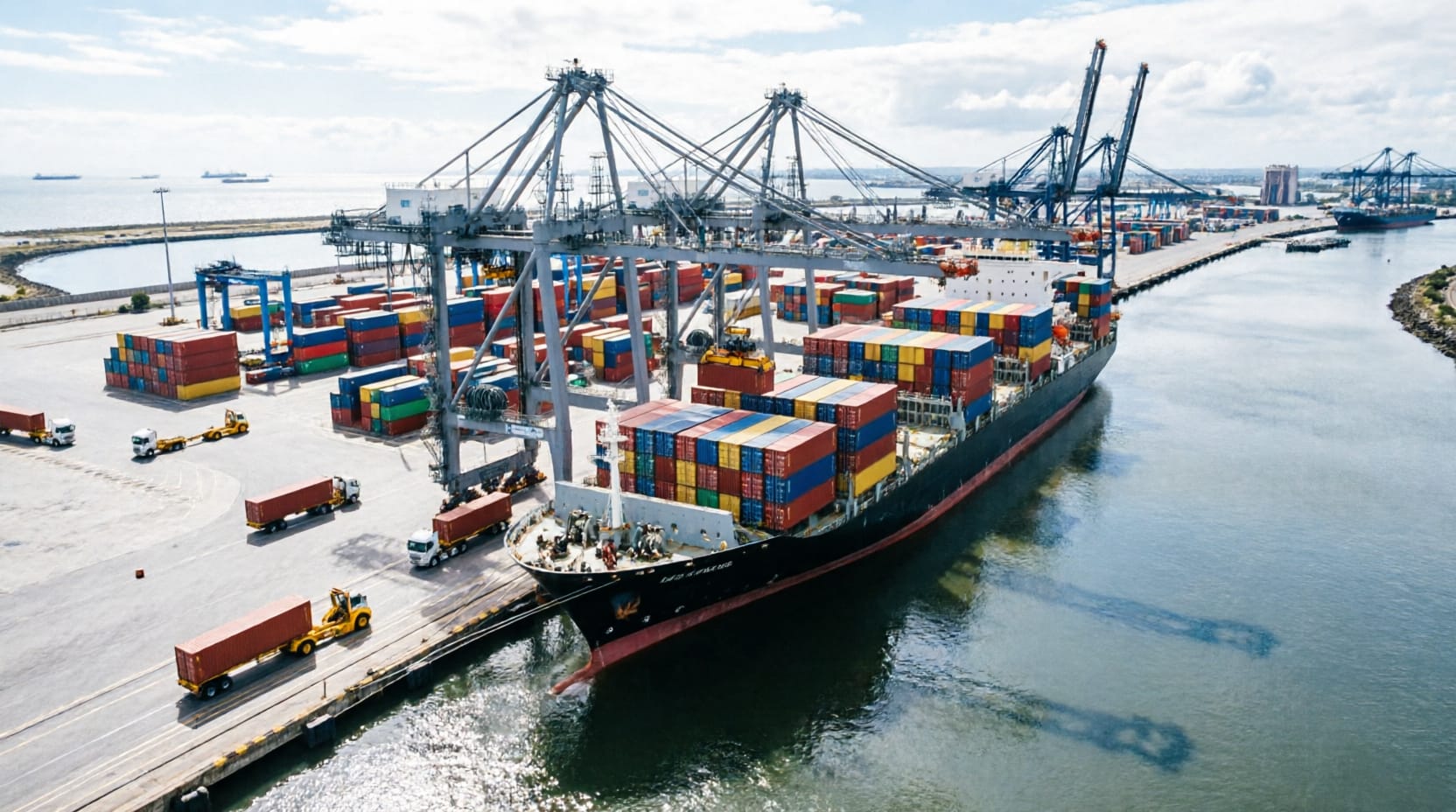

A container ship berthed under gantry cranes at a terminal, with stacked containers and road trailers on the quay.

Trade-based laundering survives a review that checks the invoice and the manifest separately

Nerous puts the commercial terms, the document set, the shipment record and the counterparty history into a single comparison, and keeps every figure traceable to the document it came from. The reviewer still decides.

A worked example of a trade under review

NR-04291 · L/C 88214 · 4 of 27 checks failed

Electronic integrated circuits, Singapore to Rotterdam

HS 8542.31 · CIF · 2,400 units · $184,200

$50,760

Quantity and value as invoiced, as carried, and as benchmarked
Field Invoice Carrier / market benchmark
Quantity 2,400 Does not match: 1,860
Unit price $76.75 Does not match: $55.60
Gross weight 4,840 kg Does not match: 3,751 kg
Discharge port Rotterdam Rotterdam
  • +38.0%

    Unit price above the corridor median

    $76.75 declared against a $55.60 median for HS 8542.31

  • 540 units

    Invoice and bill of lading disagree

    2,400 invoiced, 1,860 on the transport document

  • Jebel Ali

    Bill of lading switched in transit, consignee changed

    Second set issued on discharge, first set not surrendered

  • No role

    Payment tendered by a party outside the contract

    Remitter is neither the buyer, the seller, nor their agent

The manifested weight of 3,751 kg is consistent with the 1,860 units on the bill of lading, not the 2,400 on the invoice, so the transport record corroborates itself and the invoice is the outlier. Against a $55.60 median the declared value runs $50,760 above benchmark, on goods partly never loaded. Hold the credit, request the original transport documents, and put the price basis to the applicant in writing.

A worked example. The figures reconcile, and every check it fails is one a reviewer has to run by hand today, across four systems.

A reach stacker lifting a shipping container onto a road trailer in a container yard, with trucks queued at a warehouse dock behind.

Every control can pass and the transfer still completes

for trade finance operations, financial crime and correspondent banking teams

A trade misinvoicing scheme does not need to defeat any control. It needs the controls to keep working exactly as designed, each on its own record. The payments team gets a credit that matches its instruction. The trade operations team gets a presentation that complies with the credit. Customs gets a declaration that matches the paperwork in the container.

Nobody is wrong, and nobody holds the two records whose disagreement is the entire transfer. The evidence is not missing. It is distributed, and distributed evidence is indistinguishable from absent evidence at the moment of decision.

The payment record

Amount, currency, value date, ordering and beneficiary institution, remitter and beneficiary names, a reference line.

Whether anything shipped, what it was, and what it was worth.

The document set

Goods description, HS heading, quantity, unit price, incoterm, load and discharge ports, vessel, consignee.

Whether the price has a market basis, and whether these documents already supported another payment.

The comparison

The difference between the two, which is the only place the transfer is visible at all.

Nothing, but no system produces it by default.

How the mechanism works

“It can be difficult to identify these activities given that financial institutions see only the documents related to a transaction and not the goods themselves. Further, documents related to trade-based money laundering may be created by the money launderers themselves with no neutral third party to verify the validity of the documents.”

Financial Crimes Enforcement Network, Advisory FIN-2010-A001, 18 February 2010

Four ways a clean-looking trade carries value it should not

The mechanisms below account for most of what gets reported. They are not exotic. Each one works by making a single field in the record disagree with the physical trade, and each is caught by comparing documents that different teams normally hold separately.

Where the value actually moves

Trade misinvoicing settles a real payment against a misstated fact. The bank sees a credit that matches its documents, the customs authority sees a declaration that matches the container's paperwork, and the difference between the two records is the transfer.

Which single documented fact carries the whole discrepancy: the price, the count, the description, or the party?

How the mechanism works

Over- and under-invoicing

The quantity shipped is honest and the price is not. Over-invoicing an export moves value to the exporter; under-invoicing an import leaves it with the importer. Both are ordinary commercial negotiation until the declared unit price stops tracking anything observable.

Against what did you compare the unit price, and does that comparison hold at this heading, quantity, incoterm, and date?

Pricing red flags

Over- and under-shipment

The price survives scrutiny because it is genuine. What differs is the count. Phantom shipments are the limit case: documents in good order for a container that was never loaded, which is why the transport record and the invoice have to be read against each other rather than in sequence.

Do the packing list, gross weight, container count, and bill of lading agree with the invoice, and if not, which two of them agree with each other?

Reconciling quantity

Multiple invoicing

One genuine shipment, invoiced more than once, often through different banks so that no single institution sees the repetition. Nothing about any individual payment looks wrong, which is the point: the anomaly exists only across files that are not usually compared.

Has this transport document reference, container number, or vessel voyage already supported a payment somewhere in the book?

The multiple invoicing pattern

Where each check has to look before it can answer

A review is only as good as the records it can reach, and the column beside each check is why these are hard. The remitter sits in the payment instruction, the amendment history on the credit, the goods description across four documents in three formats, the counterparty's trading record somewhere else again. Half of them cannot be answered from any single system, which is exactly why they are the ones that get skipped.

The checks run against a single trade, and the record each one has to reach
Area Check Record it has to reach
Unit price against comparable trades at the same heading, incoterm and quantity band Invoice against market reference data
Invoiced quantity against the quantity on the transport document Invoice against bill of lading
Manifested gross weight against the invoiced count and unit weight Packing list against carrier manifest
Freight charged against the weight and volume actually carried Carrier invoice
Goods description consistent across invoice, bill of lading, certificate of origin and packing list The document set, read against itself
Transport document and container references checked for a payment already made against them The trade book, across products and branches
Bill of lading reissued in transit, or consignee changed after loading Carrier records and document history
Letter of credit amended without a commercial reason Amendment history on the credit
Remitter or beneficiary sitting outside the contract Payment instruction against the contract parties
Counterparty's stated business and prior trades consistent with these goods at this volume Counterparty file and trade history
Route, vessel capacity and transit time consistent with the declared shipment Vessel and port records
Goods, value and destination against export controls, sanctions and free-trade-zone exposure Classification and screening

The counterparty and payment checks are mapped to the indicators published in FinCEN Advisory FIN-2010-A001, so a finding can be written up against a named indicator. No single check settles anything on its own, and each is read against the activity expected for that customer.

Three jobs a trade review needs and rarely gets time for

Establish a price basis that will survive challenge. Read the document set against itself rather than against the credit. Keep the audit trail attached to the finding so it is still defensible in six months. Each is mechanical, each takes time the queue does not allow, and skipping any one of them is what lets a case close early.

  1. Give the declared value something to be tested against

    A unit price is only high or low relative to a comparison, and the comparison has to survive the specifics: the same heading, a similar quantity, the same incoterm, the same period. Nerous assembles that basis and shows it, so a reviewer can argue with the benchmark rather than accept a score.

    $76.75 / unit
    $55.60 / unit
    +38.0%
    HS 8542.31, 41 comparable trades
  2. Put the document set in one column

    Discrepancies between an invoice, a packing list and a transport document are found by reading them side by side. That is mechanical work, and it is where the exception usually is, but it is normally done by eye across separate files under time pressure.

    2,400 → 1,860
    4,840 kg → 3,751 kg
    Changed at transshipment
    Agrees
  3. Keep every figure attached to the document it came from

    A finding is worth little if the reviewer cannot say where the number came from. Each figure stays linked to its source document and its retrieval time, so the case file supports a SAR narrative or an internal challenge months later.

    4 of 27 checks failed
    Invoice, B/L, packing list, market data
    $50,760
    Held for the analyst

Answers, with the sources attached

where a published source settles the question, it is cited

What is trade-based money laundering?

Value moved across a border by misstating the price, quantity, quality or description of goods in a trade that is otherwise real and documented. Because settlement follows the documents, the transfer completes before anyone looks at the goods. FATF has treated it as a distinct typology since 2006.

Why does transaction monitoring miss it?

Because the payment is the honest part of the scheme. Monitoring looks for anomalies in account behaviour: velocity, structuring, unusual counterparties, high-risk corridors. A misinvoiced trade produces none of them. The payment matches its instruction, its instruction matches the documents, and the discrepancy sits between the documents and the goods, which the payment record never touches.

Isn't a documentary credit examination already a document check?

It checks the documents against the terms of the credit, not against the commercial reality of the trade. UCP 600 article 5 is explicit that banks deal with documents and not with the goods to which those documents may relate. A conforming presentation can describe a shipment that never happened, at a price with no market basis, and still be conforming.

How much does a single red flag tell you?

Very little, and a price variance with an ordinary commercial explanation is the common case rather than the exception. What raises a question to a finding is a second record disagreeing with the first: a quantity that will not reconcile, a consignee that changed in transit, a remitter with no role in the contract. One indicator generates an alert. Two that cannot both be true generate a case.

Does the platform decide anything?

No. It assembles the comparison, states which checks failed, and keeps every figure traceable to the document it came from. The escalation decision stays with the investigator, as does the suspicious activity report, which has to set out in the narrative why the activity is suspected. Writing that is a judgement about a specific customer and a specific trade, and it is not something a score can stand in for.

What stage is Nerous at?

Early access, working with a small number of trade finance and financial crime teams on live review workflows. The product is being built against cases practitioners bring us rather than against a requirements document, which is why the conversation we ask for is a review that went badly rather than a feature list.

Bring one review that took too long

Anonymised is fine. What we want is the actual sequence: which documents you had, which system each came from, what you could not resolve, and what you eventually wrote. That conversation is worth more to us than a requirements list, and you will get our read on the case either way.